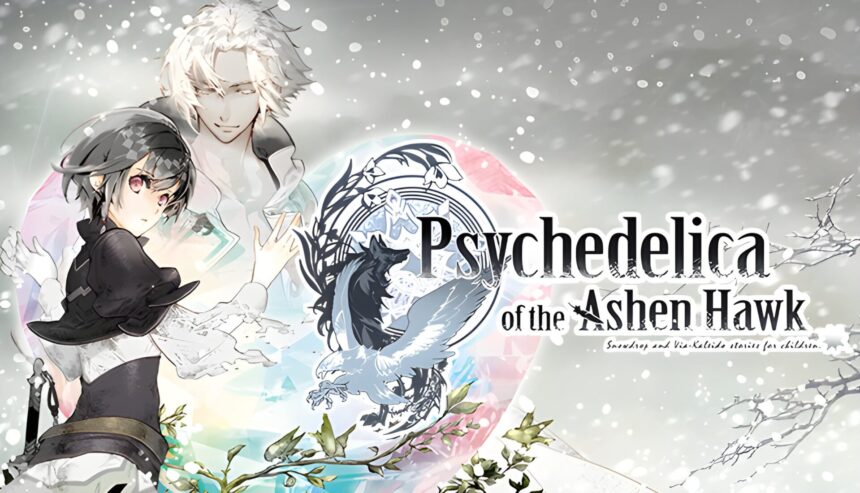
Winter that never breaks does something strange to a town’s collective nerve. People start looking for someone to blame long before they’d admit it out loud, and once they find a mark to pin it on, they hold onto it with both hands.Jed carries that blame better than anyone should have to in Psychedelica of the Ashen Hawk, a spiritual successor Otomate built to follow Psychedelica of the Black Butterfly rather than a direct sequel. She was born with a red eye, the mark locals tie to a witch blamed for the endless snow, and she’s spent her whole life passing as a boy to keep from getting killed over it. She lives in a rundown tower outside town with an amnesiac drifter everyone calls Ashen Hawk, and her quiet routine of handyman work and short errands falls apart the moment a stolen relic pulls her into a fight between two ruling clans and a string of murders nobody can explain.
Most of what happens here plays out before the story ever branches into individual routes, and I felt every hour of that stretch. The early chapters move slowly enough that I nearly put the game down more than once before anything resembling a real decision point showed up. Once the plot does turn, though, it turns hard, and I ended up finishing the back half in one sitting after almost giving up on the front.
The mystery itself is where I landed somewhere in the middle. Buried parentage, murders nobody saw coming, decades old grudges surfacing all at once, the reveals come fast enough that I had trouble sitting with any single one before the next one arrived. I liked the density more than I expected to going in, since it pushes the story well past a typical otome romance, but there were stretches where I wished for a little more room to actually process what I’d just learned before the next gut punch landed.
Whatever I thought about the pacing, Jed is the clear reason to stick around. She solves her own mystery instead of waiting for the men around her to hand her answers, and the way the story handles her living as both Jed and her real self never leans into the awkward gender comedy that setup could easily invite. The wider cast fares less evenly: a few characters get real arcs and real closure, while Tee in particular felt like she got dropped once the bigger reveals took over, leaving her thread feeling unfinished by the time the credits rolled.
None of the twelve endings this branches into aim for uncomplicated happiness, and the game never pretends otherwise. Even the best outcomes stay bittersweet, and the worse ones go somewhere outright brutal. That tone fits the rest of the Psychedelica series rather than betraying it, and I’d tell anyone going in expecting a lighter romance to adjust that expectation before starting.
The art from Satol Yuiga carries a different mood than Black Butterfly’s brighter surrealism: grays, caramels, and deep blacks that keep the eternal winter present even during scenes that have nothing to do with the weather. Exploring the town through an interactive map instead of static screens keeps the pacing from turning into a wall of text, and a flowchart makes jumping back to chase any of those twelve endings far less tedious than replaying from scratch would be.
Voice acting holds up across nearly the whole main cast, giving even side characters like the traveler Hugh a presence that outlasts his actual screen time. The opening theme, Haizora no Shizuku, and the ending theme, Vermelho, both fit the wintry mood better than generic background music usually manages, even if the rest of the score stays more functional than memorable.
The ending I landed on hit harder than I expected given how procedural some of the reveals felt getting there. Watching Jed take control of how her own story plays out, instead of leaving that choice to the town that spent her whole life afraid of her, landed as the one truly earned gut punch in a story that otherwise moves through its darkest material fast.
Verdict
Psychedelica of the Ashen Hawk earns its place as one of the darker entries in the Psychedelica line, built around a heroine in Jed who solves her own mystery instead of standing around waiting for someone else to solve it for her, backed by cold, striking art from Satol Yuiga and a mystery packed with more reveals than most otome titles attempt. Its slow common route and the sheer density of everything that unloads once it finally kicks into gear won’t work for everyone, and a few side characters like Tee end up shortchanged once the bigger twists take over. Anyone who wants a mystery forward otome willing to sit in real tragedy instead of comfort should still walk away satisfied.