As someone who’s read more boys’ love visual novels than I can probably justify, I’ve grown to appreciate the specific pleasure of watching a genre reputation get complicated on purpose. This might be why I found DRAMAtical Murder, a game from a developer whose name is practically synonymous with uncompromisingly bleak material, so uniquely appealing precisely because of how much lighter it plays for most of its runtime. It successfully evokes real emotional stakes by mixing candy-bright cyberpunk spectacle with a conspiracy plot that only fully clicks once multiple routes are stitched together, all while holding back its bleakest material for one specific, unavoidable route. The patience and route-order awareness needed to get the full picture here can be genuinely demanding, especially once the secret finale rushes to answer everything the other four paths spent hours withholding, but this colorful, uncompromising cyberpunk mystery still manages to pack a real punch.
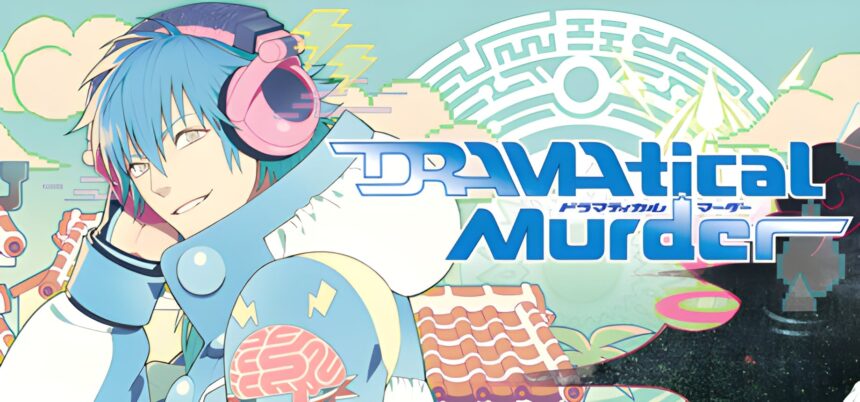
A junk shop clerk with a talking AI companion and a hidden second personality doesn’t sound like the setup for one of the most influential boys’ love visual novels ever made. Developed by Nitro+CHiRAL and originally released in March 2012, this cyberpunk visual novel follows Aoba Seragaki, a young man living a quiet life on the isolated island of Midorijima with his grandmother Tae, pulled into a virtual reality fighting game called Rhyme after a friend’s disappearance drags him back into a world of street gangs, corporate conspiracy, and a mysterious voice-based ability called Scrap that Aoba doesn’t fully understand he possesses.
The candy-bright cyberpunk aesthetic, all high-tech virtual battles and neon-lit turf wars, sets a tone considerably more colorful and hopeful than the grim, tragedy-first structure that defines sister titles like sweet pool or Togainu no Chi, and that contrast reads as deliberate to me. Where those other games rarely offer anything resembling a genuinely happy ending, this one gives real, earned routes toward satisfying, even joyful conclusions, especially once the secret final route involving Aoba’s AI companion Ren unlocks after clearing the other four main paths.
The four central love interests each carry the story’s overarching Toue conspiracy forward a little further, and playing through multiple routes rewarded that structure for me. Details that read as background texture in one path get real, clarifying context once a later route fills in the gaps. Koujaku, Noiz, and Clear all won me over in different ways, each carrying distinct personality and a route that develops meaningfully rather than existing purely to hit genre romance beats, and Tae, Aoba’s grandmother, a former Toue researcher whose own knowledge of the corporation’s darker experiments quietly shapes several routes, stood out to me as a rare, well-written older woman in a genre that doesn’t always bother giving side characters outside the romantic cast real personality of their own.
Mink’s route is where I want to be genuinely direct rather than soften anything, even discussing the all-ages version. His storyline carries real, unavoidable weight around sexual coercion, and I found his characterization and visual design lean on troubling, reductive Indigenous stereotyping in ways that read as genuinely uncomfortable rather than incidental. That criticism holds regardless of which content version is being played, since it’s baked into how the character himself is written and drawn, not just into explicit scenes removed for the all-ages release. It’s worth going in aware of that rather than discovering it partway through, and it’s a legitimate, specific flaw in an otherwise strong game rather than a minor quibble.
Presentation stands as an unqualified strength across the board for me. The character art carries real polish and distinct visual personality across the cast, and the soundtrack from GOATBED, whose music Aoba himself is even established as a fan of within the story, was one of the clear highlights of my time with the game, elevating both the story’s lighter, sweeter stretches and its tenser confrontations. Full Japanese voice acting adds real texture throughout, even if a handful of performances lean melodramatic in ways that read as more charming than distracting to me. Worth flagging directly for anyone sensitive to it: frequent UI flashes, cut-ins, and rapid animations throughout carry real risk for players prone to seizures or migraines.
Verdict
DRAMAtical Murder earns its status as one of the most well-known boys’ love visual novels for real reasons, a genuinely engaging cyberpunk mystery, a cast worth caring about across four distinct, well-developed routes, and presentation, especially its soundtrack, that elevated the whole experience for me. I have real, specific criticism for Mink’s route, both its coercive content and its handling of Indigenous imagery, and the way every route defers its biggest answers to a rushed secret finale is a genuine structural flaw. For BL and cyberpunk fans able to go in with clear eyes about those specific issues, this remains a genuinely engaging, well-crafted story that earned its lasting popularity as far as I’m concerned.