I downloaded Tasokare Hotel expecting a disposable free mobile time-waster, and found something considerably smarter buried underneath its free-to-play trappings. Because herein lies a mystery structure built entirely around amnesia as both narrative device and gameplay mechanic and trust me when i say playing this visual novel was really fun. Developed by SEEC, this escape-adventure visual novel drops its protagonist into a liminal hotel suspended between life and death, where guests arrive with no memory of who they were or how they died, and the player’s job is to piece together each new arrival’s identity by exploring rooms decorated with fragments of their former lives, in an investigative loop that borrows real structural DNA from Ace Attorney’s evidence-gathering and confrontation format.
Once Neko Tsukahara, the main character, wakes up in an empty desert landscape with no memory of anything, following a strange sign pointing toward a retro, old-fashioned hotel standing alone in the middle of nowhere. Taken in by the hotel’s staff, she decides to work there while she waits to either recover her memories or move on entirely, spending her time helping newly arrived guests untangle their own forgotten identities by exploring rooms built from clues tied to who they used to be. Each guest’s chapter plays out as a self-contained mystery, one that can, and often does, end badly if you make the wrong calls along the way.
That structural willingness to actually let things go wrong is one of the game’s clearest strengths, in my experience with it. Bad endings here aren’t rare, gentle slaps on the wrist. Characters can die, get sent to entirely different fates, or leave Neko permanently stuck without her memories depending on choices made mid-investigation, and the sheer number of divergent, sometimes genuinely dark outcomes gave even a comparatively short, chapter-based mystery real stakes for me. Neko herself carries the whole experience with a lot more personality than a typical amnesiac protagonist usually gets. She’s blunt, physically confrontational when pushed, prone to genuine anger rather than passive bewilderment, and that specific character voice, “eyes of a dead fish” being her canonical, self-deprecating description, made her a much more compelling lead than the format usually produces. Watching her clash with Osoto, the story’s Moriarty-coded rival figure whose true nature slowly reveals itself across the game’s central overarching mystery, gave the episodic, guest-of-the-week structure a genuine connective spine worth following beyond any single chapter’s individual puzzle.
The puzzles themselves stay largely visual and intuitive, more about carefully examining rooms for contextual clues than parsing dense written riddles, which kept the whole experience approachable for me even while relying on a rougher translation. And the translation genuinely is rough. The original English localization carries real, noticeable issues, less outright broken machine translation and more inconsistent tone and clunky phrasing that undercuts characters’ intended charm or menace in specific moments. It stayed followable throughout and never actively confused me, but it’s a real, persistent friction point against otherwise strong writing and character work, the kind of gap that keeps a genuinely clever mystery from landing with quite the same polish the Japanese original presumably achieves.
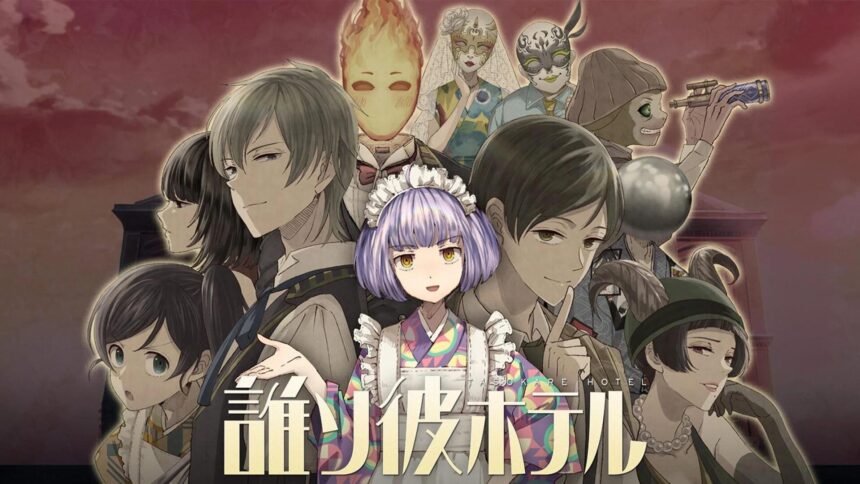
Presentation is where this game earned nearly universal praise from me regardless of any other complaints. The character designs carry real personality even among faceless background guests, and the smooth jazz soundtrack underscoring most scenes builds a consistently melancholic, appropriately liminal atmosphere that paid off with real thematic weight once the hotel’s own tragic backstory came into focus partway through. The free-to-play monetization model is the other significant friction point worth being upfront about. Chapters gate behind a ticket system that refills slowly for free players, and unlocking bonus CGs and gallery content costs additional in-game currency on top of that, a structure clearly designed to nudge free players toward eventually spending real money, even if I was able to complete the core story without ever paying anything myself.
A more recent remake, Tasokare Hotel Re:newal, released in Japan for mobile in December 2022 and on PC via Steam in January 2024, with meaningfully upgraded visuals, added voice work, new music, and additional character content, including a wholly new guest storyline. It gives the game a more premium presentation closer to what its writing arguably always deserved, though as of this review it remains without a confirmed official English release, leaving the original mobile version I played as the primary way most English-speaking readers will actually encounter this story.
Verdict
Tasokare Hotel builds a genuinely clever mystery structure around its amnesia premise, anchored by a protagonist with real personality and a willingness to let its branching investigations end in real, sometimes dark consequences rather than a single guaranteed happy outcome. A rough English translation and a free-to-play monetization structure built around limited daily tickets hold the experience back from feeling fully polished, and the lack of an English release for its visually and content-enhanced remake means most readers are stuck with the rougher original version for now. For anyone drawn to bite-sized, Ace Attorney-adjacent mystery structures and willing to work around some translation friction, this remains a genuinely charming, well-conceived free mobile visual novel worth the investment of time, if not money.