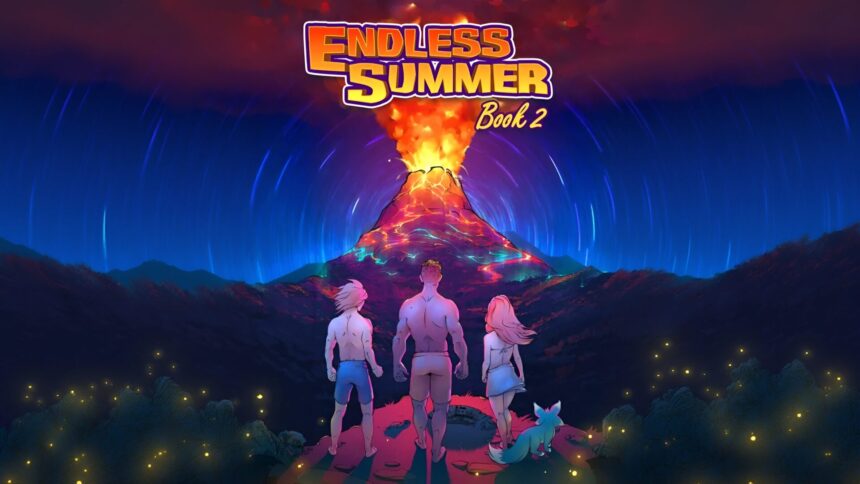
Picking up directly after Book 1’s ending, the group deals with fallout from the resort siege rather than getting a clean reset and the mystery expands considerably from here. Rourke’s private museum becomes a real location the group explores, and a trophy room inside it holds amber idols connected to each member of the cast. Touching one triggers a vision tied to that specific person, part memory, part glimpse of a possible future. Collecting enough of them eventually unlocks a bonus epilogue scene along with a final puzzle. The visions don’t confirm a fixed outcome for anyone. They read more like warnings than answers, and the game is careful never to present one as settled fact. The wider Watchers threat carries over from Book 1 too, now pursuing the group after they get scattered across some kind of altered timeline, a thread the story picks up on its own terms rather than explaining upfront.
Book 2 introduces a system called Tough Choices, where an interaction’s outcome depends directly on the relationship already built with that character rather than purely on which option gets picked in the moment. A shaky friendship carried over from Book 1 can make an interaction fail here even with a reasonable-sounding response, and a strong one can carry a weaker choice through. It’s a real mechanical consequence for a system Book 1 spent its whole runtime setting up, not flavor text acknowledging relationships exist.
Aleister returns as a bigger presence than his brief, standoffish role in Book 1 suggested, and his loyalties stay hard to pin down throughout, keeping group decision-making tense rather than settled. The rest of the returning cast, Sean, Jake, Grace, Diego, Quinn, Estela, Raj, Michelle, and Zahra, get pulled into that same uncertainty, since new information about several of their pasts surfaces here and occasionally damages friendships Book 1 spent real time building.
The writing reaches outside Endless Summer’s own story more than Book 1 did. Idol flashbacks put Hartfeld University, the campus from The Freshman series, on screen more than once. Your character, Jake, Sean, and Quinn turn out to be fans of The Crown and the Flame, a television show that exists inside Choices’ other series. Jake is established as the brother of Rebecca McKenzie, a Most Wanted character, and Grace’s mother runs a company, Mansingh Transglobal, referenced across multiple unrelated Choices titles. None of it requires knowing those other stories to follow this one, but it gives Endless Summer’s world a sense of actually connecting to something bigger instead of existing in isolation.
Pixelberry kept the visual style established in Book 1 here, one of only two entries in the whole Choices catalog to use that particular look before the studio moved future titles to a different house style. The soundtrack drew direct inspiration from a real song this time, Vampire Weekend’s “The Kids Don’t Stand a Chance,” which the writing team cited as the mood behind the book. The same confrontation theme that scored villain encounters in Book 1 carries over here too, doing the same job again. Wardrobe customization, inherited from an earlier Pixelberry title rather than invented for this one, lets players change their character’s outfit and appearance outside major plot choices, and certain outfits do feed back into relationship points during specific scenes rather than staying purely cosmetic.
The idol collection system doubles as this book’s most direct monetization pressure. Diamonds unlock idols outright for anyone who doesn’t want to wait for story-based opportunities to earn them, and the full set of twelve currently costs 220 diamonds combined, up from a lower price at the book’s original release. Smaller interactions get gated too; breaking into a sealed display case partway through the story costs diamonds on the spot with no free alternative offered. None of this blocks the main plot from advancing, but seeing every idol’s individual vision, plus the bonus epilogue content unlocked by collecting all twelve, means either real patience or real spending. That’s a steeper ask than Book 1’s freemium structure, which kept its diamond-gated content mostly cosmetic by comparison.
Verdict
Endless Summer, Book 2 keeps its predecessor’s mystery moving forward rather than resetting it, adding real mechanical weight to relationships through Tough Choices and widening the world through connections to Pixelberry’s other series. Its idol system is the clearest expression of both the book’s best idea, letting players glimpse consequence without ever pinning down a fixed outcome, and its steepest monetization ask, with the full set now running well past anything Book 1 charged for. Readers already invested in this cast from Book 1 get real forward movement here. Anyone hoping to see everything without spending should budget for it accordingly.