
A trilogy closer carries a weight most stories never have to answer for. It has to make everything that came before it retroactively worth the wait, not just tie off loose ends but justify why those threads were left hanging in the first place. Plenty settle for tidy instead of earned.
Yousei is where Sakevisual closes that gap for good, written by Ayu Sakata to point the mystery machinery the Jisei series has run across two prior games directly at its own protagonist for the first time. Home doesn’t stay simple for long once Kangai settles back into his after years away, and a fresh wave of deaths tied to his own past follows close behind before he’s had much chance to unpack. He gets pulled, not entirely willingly, into a government-run team of psychic teenagers investigating crimes with abilities the games call kansei, and their latest case sends them undercover at a local university under the pretense of digging into Kangai’s own history.
That undercover pretense collapses fast once a professor turns up dead, and the investigation shifts into a race against a returning antagonist from earlier in the series, both sides chasing the same information neither can afford to lose. What works about how this closer is built is that it never treats Kangai’s personal history and the professor’s murder as separate threads pulling for attention. They braid together early, and the game trusts that whatever investment built up in Kangai’s fragmented past across the first two entries will carry real weight once that history collides with the present case.
This isn’t the ideal entry point into that story. Newcomers will miss the emotional shorthand built around Kangai’s unresolved grief over his sister’s murder, a wound the first two games spend real time establishing, and coming to this finale cold means reading the last chapter without having sat through everything that made it heavy. That’s a real cost for anyone tempted to start here.
Aki Mizutani carries a lot of this entry’s personality, a reformed con artist who’s more pragmatic than reformed, and she gets some of the sharpest material in the cast by operating in enough moral grey area that her loyalty never once feels like a foregone conclusion. Naoki, Li Mei, and Chance don’t get that same depth, defined mostly through their function inside the investigation rather than arcs of their own, and for a mystery-forward finale trying to close out a long-running plot rather than expand its ensemble, that trade reads as reasonable even when a couple of those teammates end up thinner than the leads.
Layering campus investigation, suspect interrogation, and Kangai’s own history, the mystery holds together across a runtime that runs somewhere between eight and nine hours, and it keeps moving instead of stalling out on any one thread too long. I stayed pulled forward by how often a new piece of the university case reframed something I thought I already understood about Kangai’s past, rather than the two threads just running in parallel.
Kangai’s search for answers about his sister’s death is the true engine underneath all of it, with the university murder working as the catalyst that finally forces everything into the open. Without giving away how any of it resolves, watching that search finally connect to a present-day case landed heavier than I expected going in, less a twist revealed than a wound the story had been circling since the first game finally getting looked at directly.
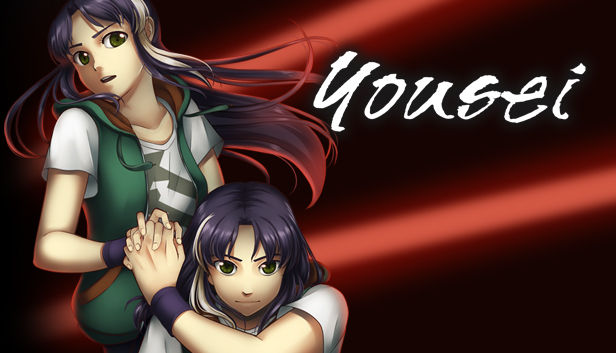
M. Beatriz Garcia’s character art holds a clean, expressive style that scales well across a cast this size, giving even secondary suspects enough visual distinction to keep a rotating cast of interviewees legible scene to scene. That legibility matters more than it might in a lighter story, since half the tension of an interrogation scene depends on being able to read a face across the table.
Marc Conrad Tabula’s score does understated work underneath all of it, supporting the mystery’s tension without ever overplaying its hand or drawing attention away from the dialogue driving each scene. The full voice cast, including returning talent like Chris Niosi and Micah Solusod, gives those dialogue-heavy interrogation stretches a texture a silent read wouldn’t have carried nearly as well, and more than once a line landed harder read aloud than it would have on the page.
Where the game shows its limits is in scope. As the third and final entry in a smaller indie trilogy, Yousei doesn’t have the resources to expand its world much past what the earlier games already built, and a couple of newer supporting characters introduced specifically for this entry never quite earn enough room to feel essential by the time the credits roll.
Verdict
Yousei closes out the Jisei trilogy by finally letting its protagonist’s buried history collide head-on with a fresh murder case, and the payoff justifies the wait for anyone who sat through the two games building up to it. Aki remains the standout of an ensemble built more for function than depth, the mystery keeps its momentum across a solid runtime, and a strong voice cast carries dialogue-heavy stretches that could have dragged in lesser hands. It’s not a place to start the series, but as a finale, it delivers the closure this trilogy was always working toward.