The Rot has spent generations killing almost exclusively women across the continent that hosts The Crimson Flower that Divides: Lunar Coupling, and the neighboring kingdom of Nasla, desperate for brides after the disease decimated its own female population, resorts to raiding across the border for women to marry off under a grim system euphemistically called Women Choose Their Husbands.
Naala grew up on the receiving end of that violence long before the story even begins. Her father died and her mother was taken by Nasla raiders when she was still a young child, leaving her an orphan adopted into the royal family of Rus and raised alongside Auri, the next king and the closest thing she has to a brother, who she was eventually set to marry as his intended bride. That history is what pushed her to train herself into a real archer and swordswoman rather than accept the same fate quietly, and it’s exactly that training that gets her caught. When Nasla’s forces reach the Rus capital years later, Naala abandons the safety of the palace to fight for her friends Shalanna and Shalu, buys them time to run, and gets captured for her trouble. I liked how little the story softens her for it either, she stays a tomboyish, headstrong presence who never bows to the sexism baked into Nasla’s whole social order, even while stuck living inside it.
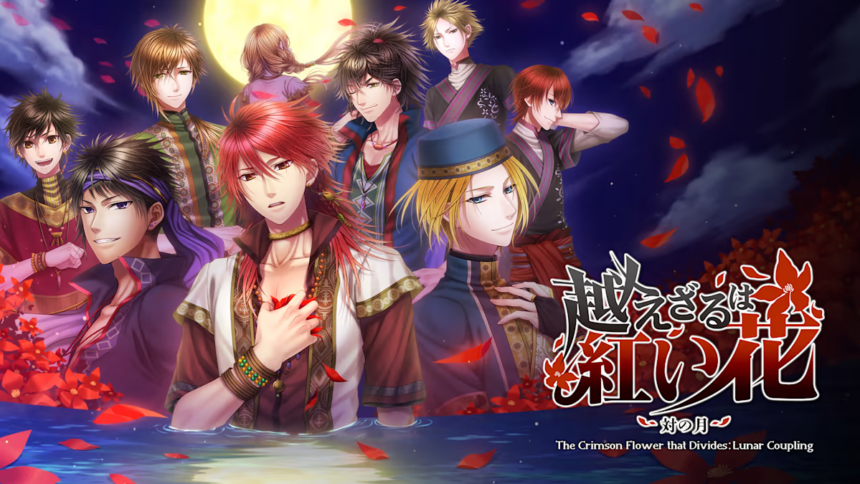
Touya, Suren, and Nohl anchor the game’s three main routes, and one of them ends up married to Naala under Nasla’s own custom in order to save one of her captured friends. Touya rules Nasla and follows through on its raiding policy with real reluctance, Suren commands its military with a bluntness that makes their first meeting a rough one, and Nohl serves as Touya’s political advisor, cold and calculating in a way that suits the underhanded side of Nasla’s politics. Five more love interests branch off from those three main paths rather than standing as fully separate routes of their own, a tiered structure that keeps a cast this large from spreading itself too thin. Ruzi works as a pacifist doctor, easy enough to talk to that he stays popular with nearly everyone in the story and actually difficult to anger, while Cef carries a much heavier weight as the only son of a minister openly opposed to the royal family, caught between his father’s politics and whatever he actually wants for himself. Naran, Esta, and Jigi round out the branching cast, and beyond even those eight sits one additional secret route that only opens up after certain other endings are cleared, a small bonus for anyone determined to see everything the game has tucked away. Several of the eight main love interests lean hard into obsessive, yandere-adjacent territory, which makes the handful of steadier, gentler personalities among them stand out by contrast rather than blend into a crowd of similarly intense men.
Naala herself carries real presence through all of it, protecting her friends even when it costs her personal safety, reading the people around her with real perceptiveness, and never losing the considerate, leader-shaped instincts that made her stand out among the captured Rus women in the first place. Auri, despite being set up early as a well-developed figure in his own right, never gets a route of his own, staying instead a background presence whose quiet devotion to Naala colors her choices without ever becoming an option on the table.
Operetta Due developed the original release in Japan, an 18-plus PC title called Koezaru wa Akai Hana that launched September 7, 2012, with writer Matsutake Ume and character designer Tsukino Omame credited on the project. A toned-down version followed for PSP in March 2014, then a PS Vita port in April 2016, and Dramatic Create and HuneX finally brought the game west as The Crimson Flower that Divides: Lunar Coupling on Switch and Steam starting February 23, 2023, with text support for Japanese, English, and both Traditional and Simplified Chinese. That long a development history shows in the writing, which carries real tonal whiplash, jumping between somber, weighty scenes and much lighter interactions without always giving either the room it needs to land properly, and the English localization shows its age too, with rough patches that occasionally undercut otherwise strong emotional beats.
The setting itself leans into a distinctly Middle Eastern-inspired aesthetic that gave the whole conflict between Rus and Nasla a texture I don’t see often in otome fantasy settings, closer to desert courts and political marriages than the usual European-flavored kingdom backdrop the genre tends to default to. The lack of any real route map makes chasing every love interest’s best ending an actual exercise in trial and error though, and I found myself relying on frequent manual saves and more backtracking than a game this text-heavy should reasonably ask of anyone. Character art carries some real inconsistency too, occasionally awkward proportions and posing that betray the game’s age, even as the surrounding background art does real work selling the fantasy setting’s oppressive, divided atmosphere.
This Lunar Coupling edition does meaningfully expand on prior versions, adding fresh after-stories for all eight main love interests along with new perspective episodes woven into the main story that flesh out each character’s inner life beyond what earlier releases offered. Full voice acting covers the whole cast, Naala included, which is rare enough for this genre that it stood out to me immediately, since most otome protagonists stay silent specifically so players can project onto them, and hearing her own reactions voiced out loud instead added a layer of real, specific personality to scenes that might otherwise have stayed generic. Ruzi’s voice actor Nakazawa Masatomo brings the same easy warmth to the role that defines the character on the page, and Cef’s actor Oda Toshimitsu carries real tension underneath his more composed line readings, exactly the kind of internal conflict his backstory sets up.
Watching Naala hold her own composure and protectiveness together while everything around her keeps threatening to fall apart gave even the story’s rougher, more uncomfortable stretches real emotional stakes, and that steadiness is what carried me through routes that otherwise lean into some real difficult territory.
Verdict
The Crimson Flower that Divides: Lunar Coupling builds a dark, uncompromising otome by refusing to soften the trafficking and coercion at the heart of its premise, and Naala’s steady, protective presence carries the story through routes that range from compelling to outright difficult. Its dated character art, occasionally rocky localization, and frustrating lack of a proper route map keep it from aging as gracefully as its expanded content deserves, but for readers willing to look past those rough edges, the tiered structure connecting eight main love interests, a bonus secret route, and a distinctly Middle Eastern-inspired setting delivers real variety. This isn’t a comfortable read, and it doesn’t want to be, but its heroine alone makes the trip through its considerable darkness worthwhile.